
Website Design & Development

Your website is the room the consultation starts in.

For most patients considering an elective procedure, your website is the first real look they get at your work, your judgment, and your practice. We design and build sites for aesthetic, hair restoration, and elective medical practices that load fast, answer the questions patients actually have, and turn that first look into a booked consultation.

Why it matters

Every other channel spends its money on this page.

Paid search, paid social, SEO, streaming: every one of them ends at your website. A slow page, a thin procedure page, or a gallery that will not load on a phone does not just lose that visitor. It taxes every dollar spent to send them, on every channel, for as long as the page stays up.

In competitive elective markets patients arrive already comparing. They have three or four practices open in tabs, and they are looking for a reason to rule one out. The site that loads instantly, shows real results, and answers the awkward questions before they are asked is the one that gets the call.

  • Show the work

    Result galleries, patient stories, and case highlights are the proof a prospective patient came looking for. They need to be clean, fast, and readable on a phone, because that is where most of them are seen.

  • Load in under two seconds

    Patients do not wait. Speed is a ranking factor, a conversion factor, and the first quality signal a visitor receives, before a single word is read.

  • Answer the real questions

    Candidacy, cost, downtime, recovery, what the day of the procedure is like. A site that answers these builds trust; a site that hides them sends the visitor back to search.

Where those three are missing, the pattern is always the same: higher bounce rates, paid traffic that converts a fraction of what it should, and a practice concluding the ads do not work when the page was the problem.

A pattern worth naming

Sometimes the answer is a second site, not a bigger one.

Many practices want a standalone site dedicated to hair restoration alongside the main practice site. It lets the hair program carry its own expertise, its own results, and its own campaigns without competing for attention with everything else the practice does, while still reading as part of the same brand.

It is not the right answer every time. Two sites mean two content programs, and a second domain with nothing behind it dilutes rather than focuses. We will tell you which situation you are in before anything gets built, and the Growth Audit is where that question gets settled.

The build

Six stages, in this order, every time.

Design, strategy, and technical performance are one job, not three vendors. The sequence matters: structure is decided before design, and compliance is checked before launch rather than after a disapproval.

Discovery and strategy

We start with your goals, your procedure mix, and your market. That produces the site structure: which services get their own page, how a visitor moves from a procedure page to a consultation, and which pages carry the revenue. Architecture decided here is what the SEO program builds on for years.

Design and user experience

Clean, modern layouts that reflect your brand and put your work in front of the visitor early. Every page has one job and one next step, so the path to booking a consultation is obvious on a phone at arm’s length, not just on a designer’s monitor.

Speed and technical performance

Hosting, images, and code are optimized together, and mobile is the primary target rather than an adaptation. We build to Core Web Vitals thresholds and we measure them on real page loads, because a fast development machine tells you nothing about a patient on cellular data.

Content development

Service pages, physician bios, FAQs, and procedure detail written by people who write medical marketing for a living, not generated. Every page is written to inform a patient first and to support search second, which is the only order that produces both.

Galleries and patient results

Before-and-after galleries are the most persuasive asset a practice owns and the easiest to get wrong. We build galleries that stay fast and readable on mobile, and we handle them inside the consent and platform rules that govern result imagery, so the gallery that sells your work does not restrict your ad accounts.

Compliance and launch

Accessibility, medical advertising policy, and HIPAA-safe measurement are verified before the site goes live, on the rendered pages rather than in a checklist. Then we launch, confirm every template on real devices, and hand over the keys.

The part templates skip

A medical site is not a small business site with a stethoscope on it.

Standard analytics on a consultation page with a form is how a practice ends up sharing health-intent data with an ad platform that will not sign a business associate agreement. It is the most common serious defect we find on practice sites, it is invisible from the front end, and it is installed by well-meaning agencies every day.

We build the measurement architecture the other way around: no third-party pixels on pages carrying health intent, conversion tracking that runs first-party through RootLogic, our offline conversion system, and result imagery handled inside the consent and platform rules that apply to it. Accessibility is built to WCAG 2.1 AA and stated publicly rather than assumed.

  • No third-party tracking pixels on treatment, consult, or intake pages
  • HIPAA-safe conversion measurement, first-party by architecture
  • Result galleries handled inside consent and ad-platform imagery rules
  • Copy reviewed against Google and Meta healthcare advertising policy
  • WCAG 2.1 AA accessibility, with a published statement behind it

Built, launched, running

Real practices, real sites.

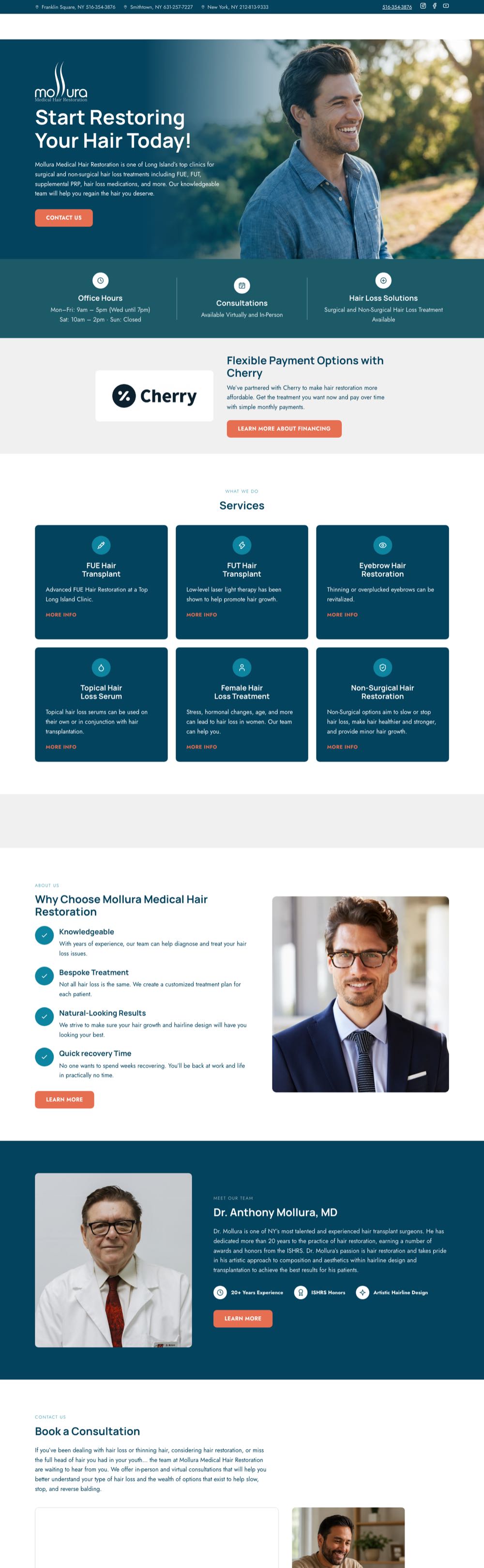
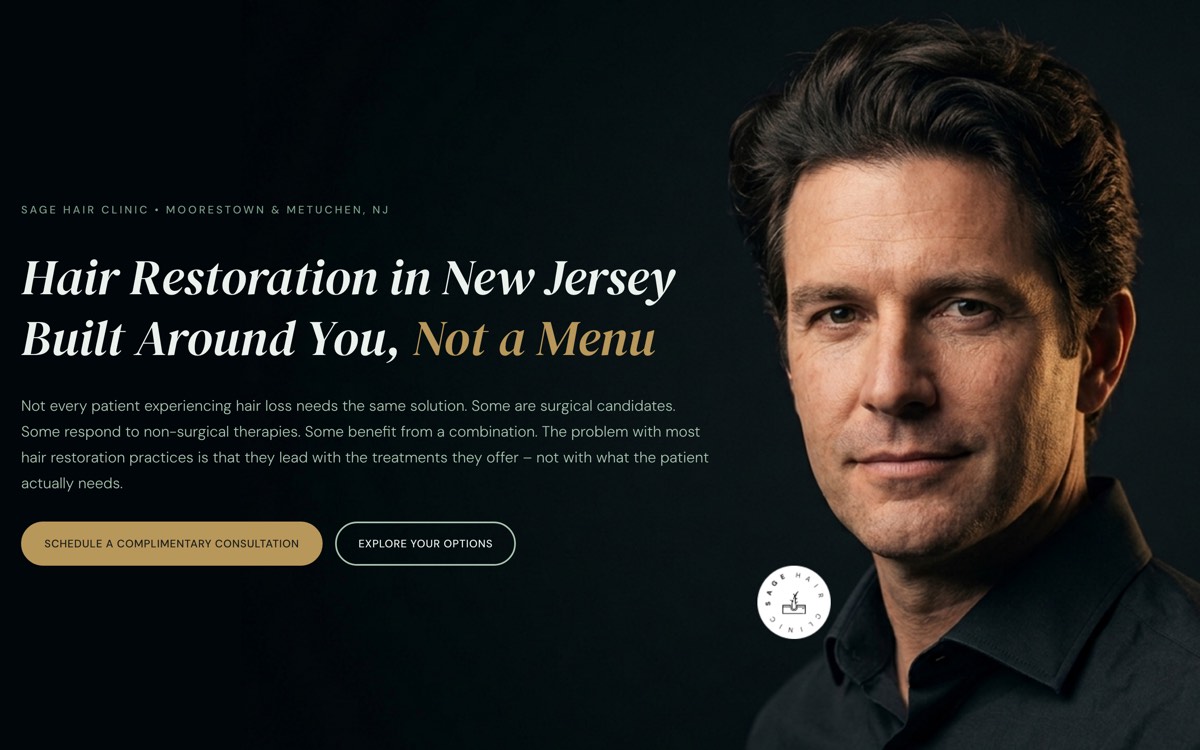
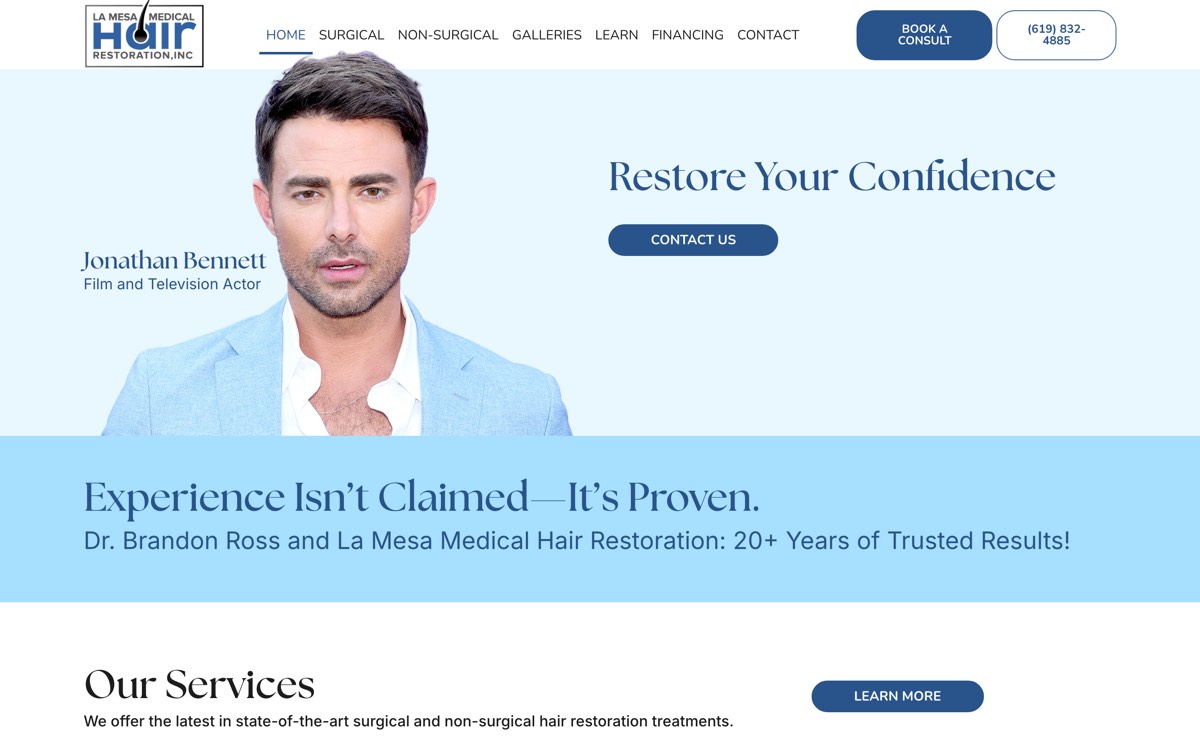
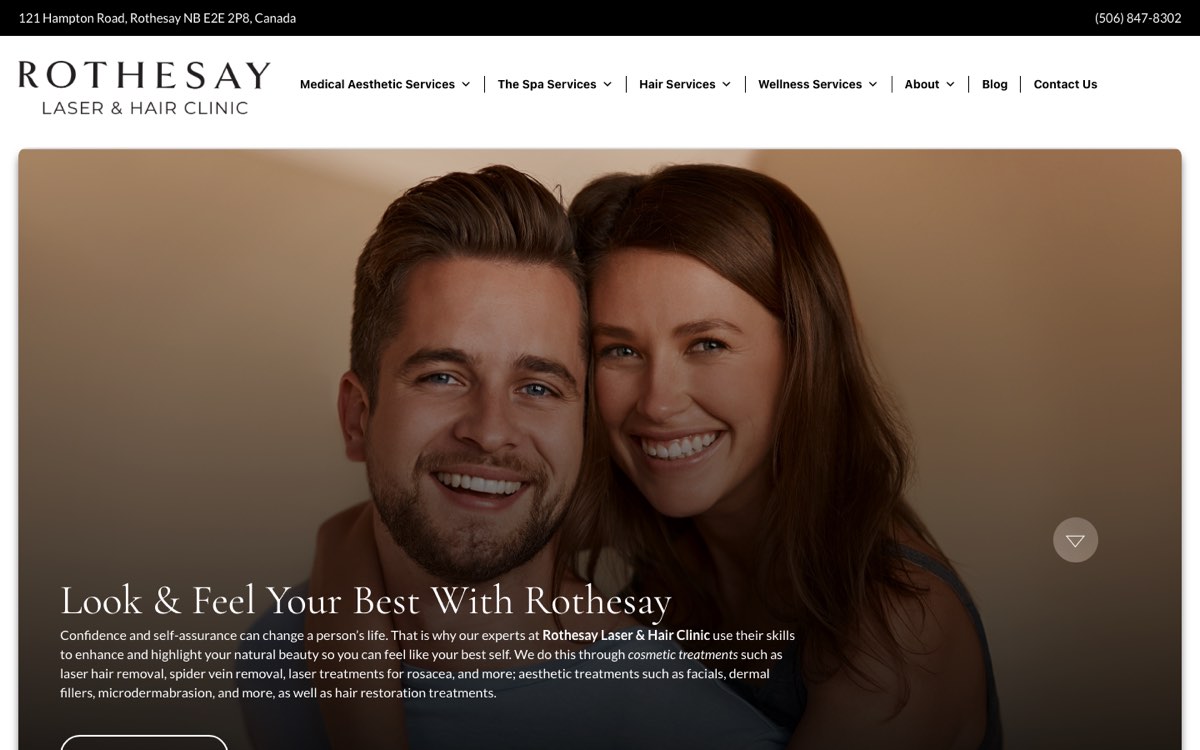
These are live builds, captured from the running sites. Patient result imagery is suppressed at capture time, which is why the galleries do not appear in the screenshots.

  • Homepage of Biltmore Surgical Hair Restoration, built by Vitality

    Biltmore Surgical Hair Restoration

    Phoenix, AZ · hair restoration

    Full homepage rebuild: dark editorial hero, review marquee, consult-first navigation.

  • Homepage of Mollura Medical Hair Restoration, built by Vitality

    Mollura Medical Hair Restoration

    Long Island and NYC · hair restoration

    Full rebuild for a three-location practice, with a deep procedure library kept navigable from the first screen.

  • Homepage of Sage Hair Clinic, built by Vitality

    Sage Hair Clinic

    Moorestown & Metuchen, NJ · hair restoration

    Two-location practice with one brand and per-office lead routing.

What you get

A site that works for the practice, not just for the launch party.

  • Your skill shown through result galleries and patient stories that load fast on any device
  • Patient questions answered before they are asked, so trust is built on the page rather than on the phone
  • Authority earned through content and social proof, so the site supports search instead of fighting it
  • Clean integration with every campaign you run, from paid ads to SEO to follow-up automation
  • More consultations, because the path from arrival to booking is designed rather than assumed
  • Speed and stability you can check yourself, on mobile and desktop, any time

Why practices choose us for this

We do not build generic websites.

Every decision on the build connects to how the site will perform for your patients and for your bottom line. That is a narrower way to work, and it is the only way a site earns what it costs.

  • Specialization

    We work with surgical and non-surgical medical practices, and nothing else. The compliance exposure, the consult economics, and the patient research cycle are already known before the project starts.

  • Conversion focus

    Design choices are made against booked consultations. An element that looks good and books nothing does not survive the review.

  • Experience in hard markets

    We have built and run sites for practices competing in the most expensive elective markets in the country, where a weak page is punished immediately.

  • Transparency

    You see how the site is performing and how it supports the rest of your marketing, in the same report as every other channel.

What you own

The site, the domain, the content, the analytics. All of it.

The domain, the hosting account, the content, the images, the tracking configuration, and the full analytics history belong to your practice, in writing, from the first day. We work inside your accounts as managers rather than as landlords. If we ever part ways, the site keeps running and it keeps being yours, with no login request and no renegotiation.

Questions

Practice websites, asked straight

How long does a medical practice website take to build?

A focused practice site typically runs eight to twelve weeks from kickoff to launch, and a large multi-location or multi-procedure site runs longer. The two stages that decide the timeline are content and result imagery, both of which need your input. We schedule around those rather than pretending they are instant, and we will give you a dated plan before any work starts.

Do we need a separate website for our hair restoration program?

Sometimes. A standalone hair site lets that program carry its own expertise, results, and campaigns without competing with the rest of the practice, and it is a common pattern for practices where hair is a distinct line of business. It also doubles the content work. The honest answer depends on your procedure mix, your market, and whether you can feed two sites. The Growth Audit answers it with your own numbers before anything is committed.

Can you rebuild our existing site, or does it have to start over?

Both happen. Where the structure and content are sound, a rebuild that preserves URLs and rankings is faster and cheaper, and we protect the organic visibility through the transition with a mapped redirect plan. Where the structure is the problem, carrying it forward just buys the same ceiling again. We tell you which one you are looking at after we have seen the site, not before.

Is a practice website HIPAA compliant by default?

No, and most are not. The usual defect is standard analytics or an advertising pixel running on consultation and treatment pages, which shares health-intent signals with platforms that will not sign a business associate agreement. It is invisible from the front end and extremely common. We build measurement that is first-party by architecture and keep third-party trackers off pages carrying health intent.

Who writes the content?

Our in-house team, all of whom write medical marketing for a living. Service pages, physician bios, FAQs, procedure detail, and the blog program that follows launch. Where a page makes a medical claim, your physician reviews and approves it before it ships. Content is not generated and handed over unread.

Do you host the site, and what happens if we leave?

We can host it or deploy it into hosting you control. Either way the domain, the hosting account, the content, and the analytics are in your name. If the relationship ends, the site keeps running and you keep everything, which is the same ownership standard we apply to ad accounts and analytics on every engagement.

Let us build a site that grows the practice.

Your website should be the hardest-working asset you own: fast, informative, and trustworthy from the first click. Start with the free Practice Growth Audit and we will show you exactly where the current one is losing patients.