




Front Desk Conversion: Why Your Practice Is Losing Consultations Before They Ever Get Booked
If your front desk conversion rate has been slipping, you are not alone — and the problem may not be your leads. Think about the last 10 inbound calls your practice received. How many were simple scheduling calls? Probably fewer than they used to be.
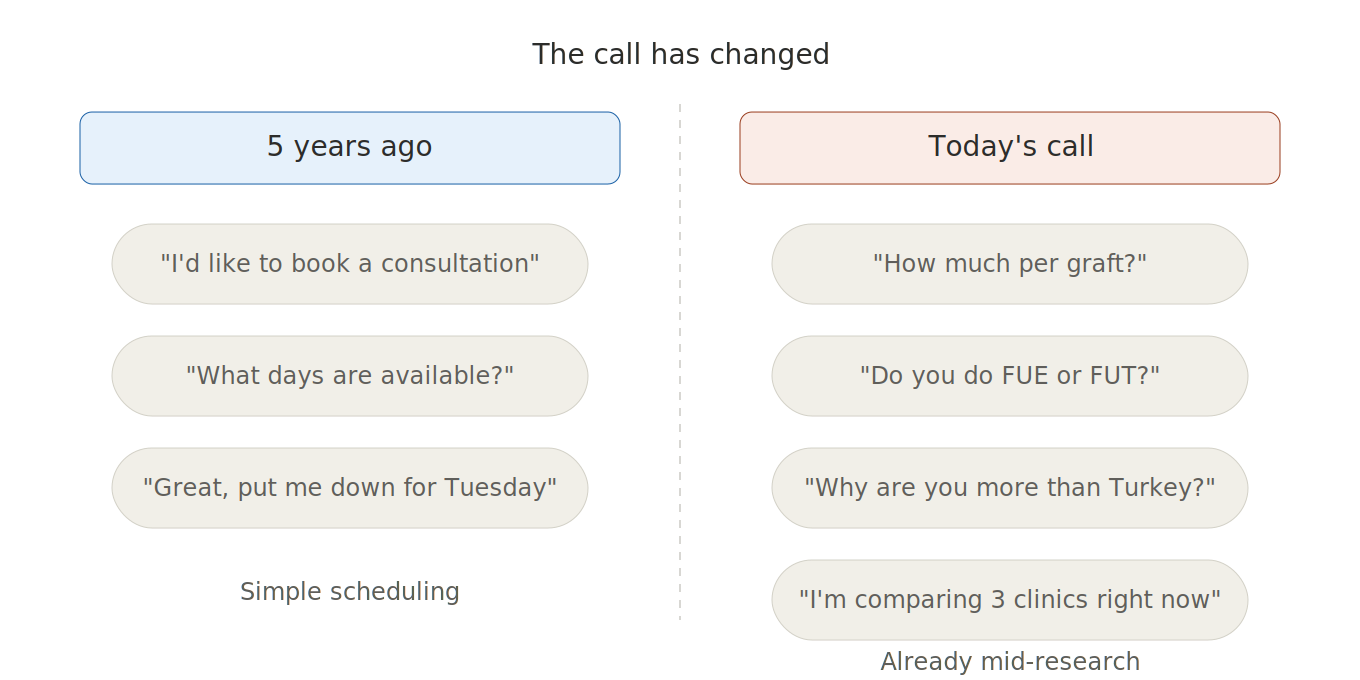
Today’s callers are more informed, more cautious, and far more likely to come into the conversation with opinions already formed. They may ask about graft counts, pricing, procedure types, recovery, or how your practice compares to other options they have seen online.
That is why the front desk role has changed.
It is no longer just about answering questions and filling the calendar. In many cases, the first phone call is where trust is won or lost.
Why the First Call Carries More Weight Than Ever for Front Desk Conversion
Years ago, many prospective patients contacted a practice much earlier in their decision-making process. They had questions, but they were often relying on the practice to guide the conversation from the beginning.
That is not always the case anymore.
Many prospects now call after spending time researching online, comparing clinics, reading patient stories, and trying to make sense of pricing and procedures before they ever speak with someone on your team.
As a result, the person answering the phone is no longer just handling intake. They are stepping into a conversation that is already in progress.
5 Signs Your Front Desk Is Costing You Consultations
When the front desk is not prepared for this shift, several problems tend to show up.
1. Conversations Become Focused on Price Too Early
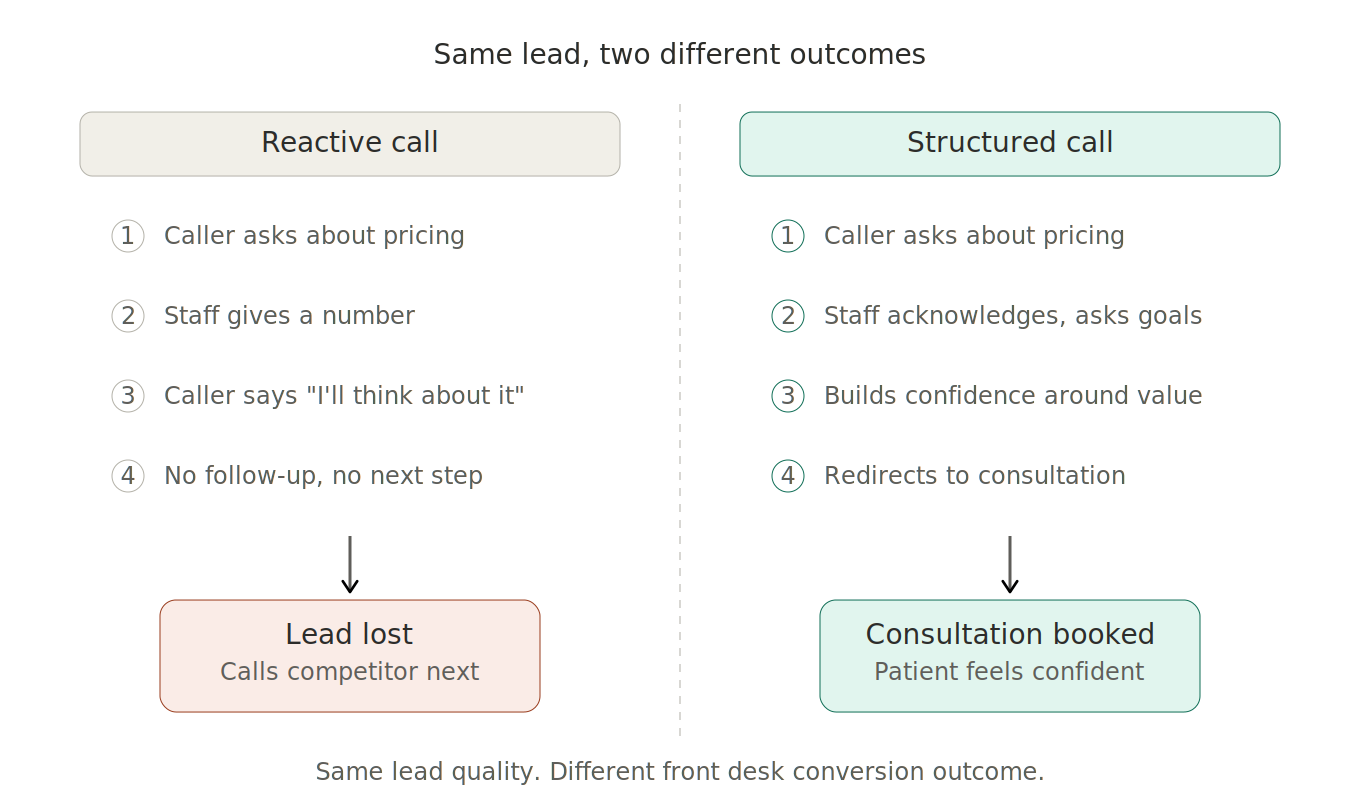
If the call immediately centers on cost, the practice can start to sound interchangeable. Without the right context, the prospect is left comparing numbers rather than understanding value, fit, and next steps.
2. Strong Leads Slip Away Unnoticed
Some of the most serious prospects ask the most questions. If curiosity gets mistaken for hesitation, your team may write off a lead that simply needed a little more confidence and direction.
3. Consultations Are Lost Before They Are Ever Scheduled
When the call lacks structure, the conversation can stall. The prospect leaves with partial information, no clear next step, and no real reason to choose your practice over another option.
4. Your Team Ends Up Reacting Instead of Leading
If the caller controls the entire conversation, your practice may never get the opportunity to shape expectations, build confidence, or explain why a consultation is the right next move.
5. Front Desk Conversion Drops Without Anyone Noticing
Without call tracking and regular review, many practices have no way to measure how effectively inbound calls are being handled. The result is a slow, invisible leak in consultation volume that gets blamed on lead quality instead of process.
What High-Performing Front Desk Teams Do Differently
The strongest teams do more than answer questions. They know how to guide the conversation in a way that helps the prospect feel understood while still moving the interaction forward.
- They create trust early in the call
- They stay calm and confident when questions get specific
- They know how to redirect the conversation toward a consultation
- They help the prospect feel like they are in the right place
This does not mean your front desk needs to sound scripted or overly sales-focused.
It means they need the training and structure to handle today’s patient journey effectively.
If Lead Quality Feels Worse, the Real Issue May Be Your Front Desk Conversion Process
It is easy to assume that inconsistent results come from weaker leads.
Sometimes that is true.
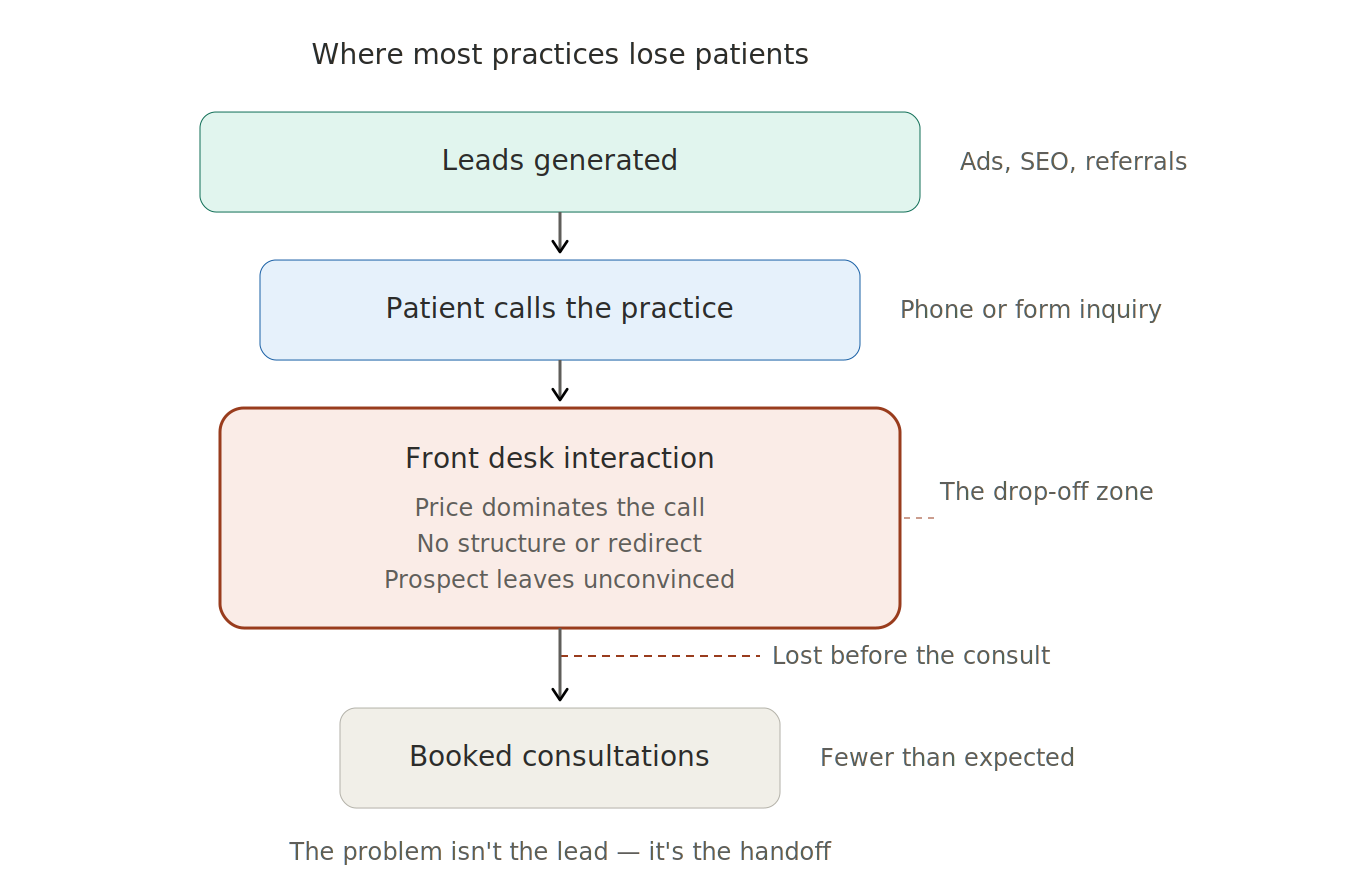
But often, the bigger issue is that the practice has not adjusted its intake process to match how prospects behave now. A strong marketing methodology does not stop at generating the lead — it accounts for what happens when that lead picks up the phone.
If your team is dealing with more shopping behavior, more objections on the first call, more drop-off before consultations, or more uncertainty around how to respond, that is not something to ignore.
It is usually a sign that there is friction in the patient journey before the consult ever begins.
A Better Question to Ask
Instead of asking whether your leads are worse than they used to be, ask this:
Is our process strong enough to convert the kind of leads we are getting today?
That question tends to reveal much more about your true front desk conversion performance than any ad dashboard ever will.
If you want to see what that lift is worth in dollars, our free Patient Value Calculator shows how a higher booking rate changes the value of every new patient and the ad budget you need to hit your procedure goal.
Final Thought
For many practices, the front desk is now one of the most important drivers of consultation volume and overall growth.
If you are noticing missed opportunities, inconsistent booking rates, too many price-focused calls, or a pattern of leads slipping away before they ever make it onto the schedule, it may be time to take a closer look at what is happening on that first interaction.
When a practice aligns its front desk process with the right strategy, the results can be dramatic. One of our clients closed over $100K in procedures within 100 days after tightening up exactly this kind of gap.
And if this is becoming a recurring issue in your practice, or you are concerned that valuable opportunities are being lost before the consult, our team can help you identify where the breakdown is happening and what to do about it.
Contact us to talk through your current process and see where improvement may be costing you patients.
