




The New “Paid Survey” Ad Scam Costing Medical Practices Thousands — And How to Stop It
If you’re managing advertising for a medical practice right now — whether you’re a doctor, owner, office manager, or front desk coordinator — this is something you need to see.
Over the last few weeks, we’ve watched a new version of the ad fraud scam make the rounds, and it’s worse than the “free hair transplant” nonsense that already cost practices tens of thousands of dollars earlier this year.
This one isn’t just wasting budget. It’s feeding negative reviews and frustrated phone calls back into your clinic.
We’ve been tracking and helping practices beat scams like this at Hair Loss Marketing — a subsidiary of Vitality Medical Marketing Group. We’ve coached dozens of teams through identifying, auditing, and shutting down these kinds of budget-killers. This latest variant is different, so let’s break down what it looks like — and what to do about it — before your next ad dollar disappears because of the Google Ads Scam.
How the “Get Paid to Take a Survey” on Google Ads Scam Works
Here’s the pattern we’re seeing across multiple specialties (medical, cosmetic, elective procedures, health services):
- Someone scrolls Facebook or Instagram.
They see a slick, well-produced video ad promising that if they qualify for a survey, they’ll get paid to complete it. The creative looks real. The hook sounds legitimate. - They click.
The ad sends them not to your site, but to an HTML page on some random third-party domain. There’s no branding, no trust signals — just a form, plus tons of ads from places like Google’s Medical Ad Network. - That page is full of ads.
It’s basically a page built to monetize clicks — often showing medical Google Ads targeted by location or keyword. The practice has inadvertently paid to have these ads served. - The user interacts.
They fill out the form. Maybe they click ads. Sometimes they call your clinic, asking if you’re going to pay them for taking the survey. - You pay, but get nothing of value.
These interactions are not qualified leads. They are bait traffic, often geographically irrelevant, untrackable in your CRM, and worthless for conversion. - Bonus damage:
Some of these frustrated survey-takers are turning around and leaving negative reviews on your Google Business or Facebook page, convinced you misled them.
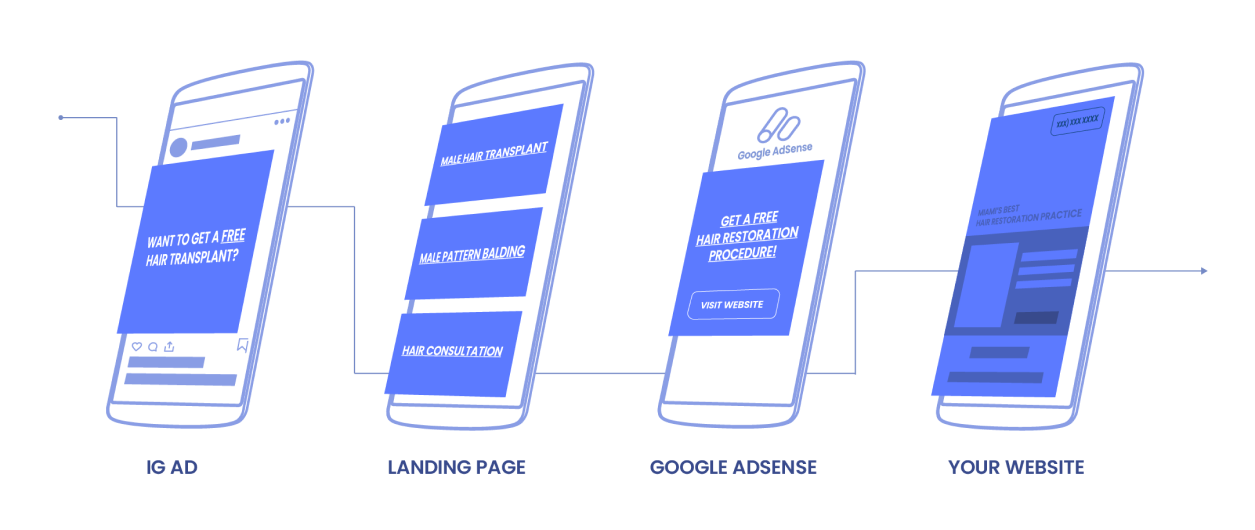
This is digital ad fraud — and it’s eating actual ad dollars daily from people trying to grow their practices.
This pattern echoes the issues we first outlined in our earlier post on ad fraud and wasted budget — the “free hair transplant” scam — where third-party sites use your ads to generate clicks and revenue while you pay for worthless responses. (See the original report: How to Report and Prevent Ad Fraud for Medical Practices here: https://hairlossmarketing.com/report-prevent-ad-fraud/) That post goes deeper into the mechanics we’re now seeing evolve.
Why Practices Are Still Losing Money
At the core of this issue is something most clinics don’t realize about how Google Ads works:
Even if you turn off “search” or the audiences you think matter, your campaign may still be showing ads through Search Partners — third-party sites in Google’s network that serve ads but don’t have the same quality controls as Google Search.
When you run a Google Search campaign:
- Your ads may show on Google Search (where you want them), but also across a broad network of Search Partners — independent sites that display ads in a search-like context.
- These partner properties often have low quality, high bounce rates, and poor user intent — precisely the kind of environments fraudsters exploit.
If your campaigns are allowed on Search Partners, even just a percentage of your impressions and clicks can come from these random pages — and that’s exactly where this survey scam is living.
If your team hasn’t explicitly turned Search Partners OFF, your budget is vulnerable.
How to Stop It — Right Now
✅ 1. Turn Off Search Partners in Google Ads
This is the single most effective preventative step you can take today.
Search Partners are not worth your medical ad spend. They are uncontrolled environments where low-quality traffic and ad fraud thrive.
Here’s how Google explains it:
https://support.google.com/google-ads/answer/1722047?hl=en
In simple terms:
If you’re running Search campaigns, unchecking the “Include Search Partners” box keeps your ads limited to actual Google Search — where people are actively looking for your services — and not on sketchy third-party domains that pay pennies per click.
Most practices don’t find the traffic from Search Partners converts anyway. Once you turn them off, you’ll see better quality traffic and fewer weird leads almost immediately.
✅ 2. Add Negative Keywords for Survey-Type Terms
These include:
- “get paid to take survey”
- “paid medical survey”
- “survey payout medical”
- “earn money medical survey”
Adding these as negative keywords stops your ads from showing when someone searches anything even remotely related.
This is critical because ad fraud groups use survey language precisely to trap low-intent users.
✅ 3. Audit Your Placements
For Display or Performance campaigns:
- Go to Placements in Google Ads.
- Exclude domains that have served these survey pages.
- Save and apply exclusions.
Every click from a scam placement is a click you paid for and didn’t convert.
✅ 4. Train Your Front Desk
Your staff should be able to:
- Identify scam leads quickly (“I clicked a survey ad, and you said I’d get paid?”)
- Log where the caller saw the ad (Facebook? Instagram? Quick capture in your CRM or notes)
- Stop wasting time converting these interactions
This isn’t just about wasted ad spend anymore — it’s about reputation management.
What This Means for Your Practice
Medical advertisers are now paying for:
- Budget wasted on low-intent clicks
- Time wasted on frustrating inbound calls
- Damage control for negative reviews from disappointed users
That’s a real cost — and it can be stopped.
Here’s the truth:
If this scam traffic is getting into your account, it’s not because you’re doing something wrong.
It’s because Google allows it, and most agencies either don’t notice…
Or don’t move fast enough to shut it down.
Meanwhile, you’re paying for:
- Clicks that were never real patients
- Phone calls that waste staff time
- Frustrated people leaving reviews that damage your reputation
And it adds up fast.
At Hair Loss Marketing — part of Vitality Medical Marketing Group — we’ve been brought in after practices lost five figures to scams exactly like this.
We don’t “optimize around it.”
We stop it at the source.
If you’re tired of wondering whether your ad budget is going to real patients or random fraud pages…
Schedule a consultation.
We’ll show you exactly where the waste is happening — and what to turn off today.
Schedule a Consultation With Our Team
We want the same for your practice.
Next Steps (Actionable Checklist)
✔ Turn off Search Partners in all Google Search campaigns
✔ Add survey-related terms to your negative keyword lists
✔ Audit and exclude bad placements
✔ Train staff on how to spot scam interactions
✔ Monitor reviews for survey-related complaints and correct misunderstandings